Physician Mortgage Loans in Detroit, Michigan
Detroit gives a physician household several large health systems to choose from, a medical school with deep urban health training at Wayne State University, and housing costs well below what most large metros ask. The tradeoffs are real too, from Michigan auto insurance to the condition of older housing stock. This guide walks a physician family through cost of living, where the clinical work sits, schools, commutes, and how physician loan availability works in Michigan.
See poll results below
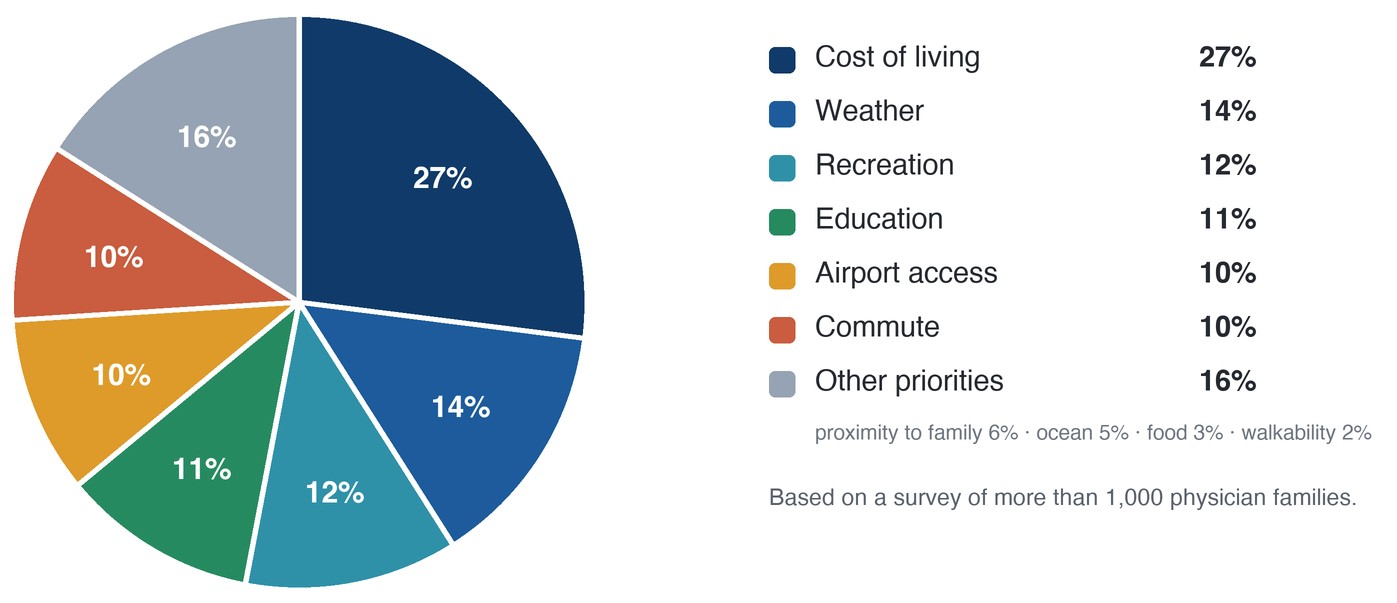
How physician families ranked their priorities
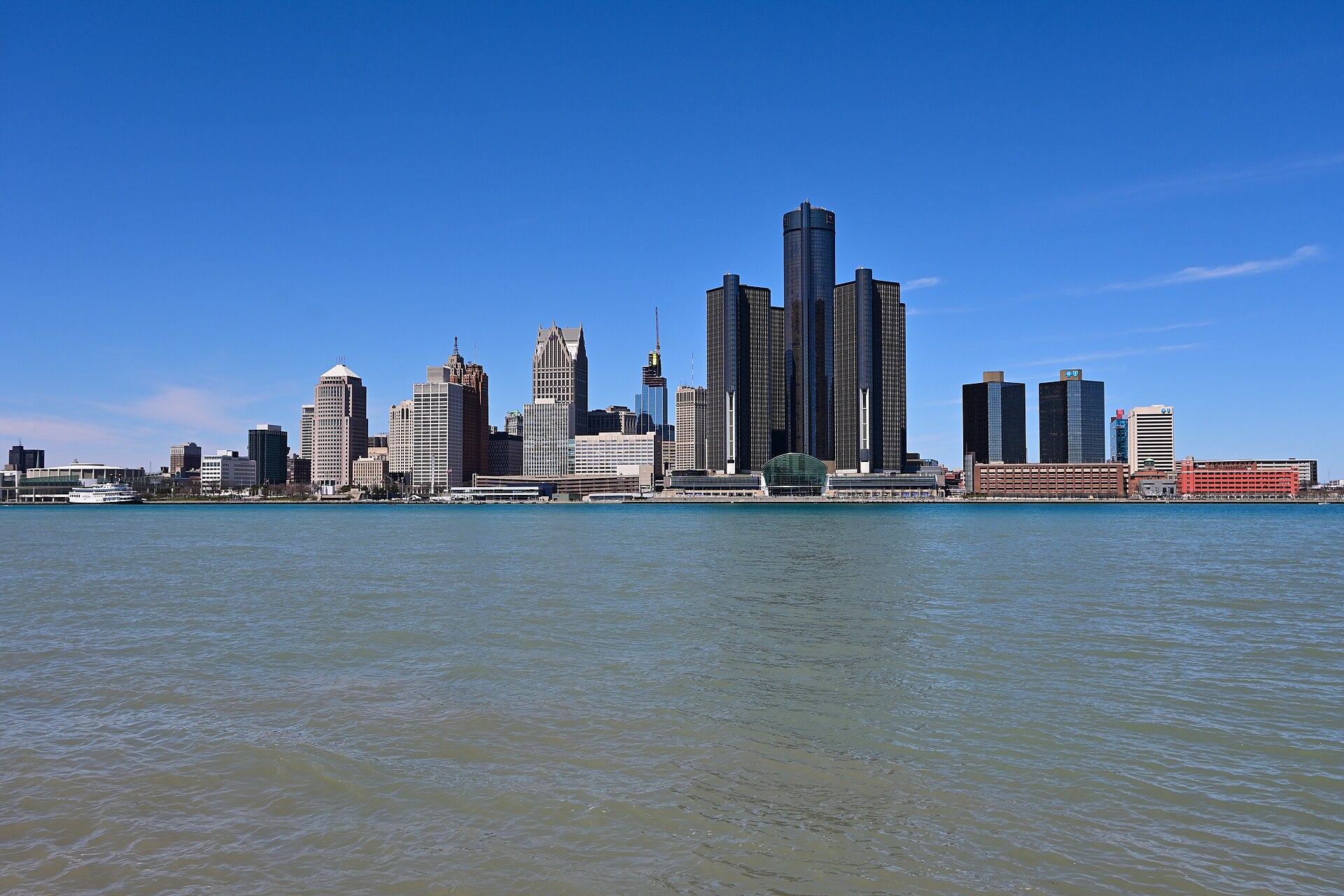
Detroit is a multi system market, and for a physician household that is the first thing worth understanding. Henry Ford Hospital anchors Henry Ford Health in the New Center area, the Detroit Medical Center runs a cluster of hospitals in the medical district next to Wayne State University, and the Wayne State University School of Medicine trains across both, with the Barbara Ann Karmanos Cancer Institute in the same few blocks.
The second is that an attending salary goes further here than in most comparable metros, which changes what a first job can look like. A household relocating for residency, fellowship, or a first attending position can often consider buying rather than renting, and the search usually falls to the spouse while the physician finishes a year somewhere else.
What physician families rank #1 · 27%
Cost of living for a physician household
Housing is the headline. Housing costs less relative to a physician income here than in most large American metros, and for a physician household that gap is the whole argument for the region. The payment that buys a condominium in a coastal metro buys a house with a yard here.
Two offsets deserve a place in the budget. Michigan runs a no fault auto insurance system with personal injury protection requirements, and premiums here run well above what physicians moving from most other states are used to, so get a quote before you sign anything. Detroit also levies a city income tax on residents and at a lower rate on nonresidents who work inside the city, which sits on top of Michigan's flat state income tax.
Property tax rates vary a great deal between the city and individual suburbs, and in some places taxes and insurance are large relative to the purchase price, which is why comparing sticker prices misleads people here. Put an actual purchase price, your student loan payment, and the real local tax and insurance figures into the physician mortgage calculator, and read the Michigan physician mortgage guide for how lenders approach the state.
Where Detroit physicians work
The Detroit Medical Center is the teaching hospital network for the Wayne State University School of Medicine, and its campus sits in the medical district next to the Wayne State campus in Midtown. It includes Detroit Receiving Hospital, Harper University Hospital, Hutzel Women's Hospital, Children's Hospital of Michigan, and the Rehabilitation Institute of Michigan there, with Sinai-Grace Hospital in northwest Detroit. The Barbara Ann Karmanos Cancer Institute, a National Cancer Institute designated center, is part of the same district.
Henry Ford Hospital sits just north in the New Center area as the flagship of Henry Ford Health, which entered a joint venture with Ascension Michigan covering hospitals across southeast and mid Michigan. Henry Ford also hosts a Detroit campus of the Michigan State University College of Human Medicine, part of a long running partnership between the two organizations, so students and residents train there as well.
The suburbs hold their own academic weight. Corewell Health William Beaumont University Hospital in Royal Oak is the flagship of Corewell Health in southeast Michigan and the clinical partner of the Oakland University William Beaumont School of Medicine, whose students also train at Corewell hospitals in Troy and Grosse Pointe. Michigan Medicine, the academic health system of the University of Michigan, is west of the metro in Ann Arbor, far enough that it is a separate housing search. Confirm which campus your appointment sits on before you narrow a search, because the metro is wide.
Poll rank #2 · 14%
Weather and seasons
Southeast Michigan gets four full seasons with a real winter. Snow and cold run from late fall into early spring, and a household that takes call should think about the commute in those conditions, along with a garage and a snow plan, before it falls for a long driveway. Summers are warm and humid and the region stays green.
Spring and fall are short and worth using. The items to check on any house here are the age of the furnace and roof, basement water history, and, near a river or low lying area, the flood zone determination, because lenders require flood insurance where FEMA maps call for it. Your own licensed insurance agent can price both flood and hazard coverage for a specific parcel.
Poll rank #3 · 12%
Recreation and family life
Belle Isle Park is the anchor, an island park in the Detroit River operated as a state park, with room for running, cycling, and a whole Saturday. The Detroit Riverwalk runs along the east riverfront through a series of parks and plazas, and the Dequindre Cut Greenway connects the riverfront up to Eastern Market, a long running public market and a weekend fixture for many families.
Culture is deeper here than newcomers expect. The Detroit Institute of Arts sits in Midtown near the Wayne State and medical campuses, the Detroit Zoo is in Royal Oak and Huntington Woods, and Comerica Park, Ford Field, and Little Caesars Arena put professional sports downtown. For water, Lake St. Clair sits at the northeast edge of the metro and the Great Lakes take the vacation traffic. Ocean access polled at 5% nationally and there is none here, though the freshwater coastline substitutes better than most inland regions manage.
Poll rank #4 · 11%
Schools and education
Inside the city, Detroit Public Schools Community District runs the traditional schools along with application based examination high schools, including Cass Technical High School downtown and Renaissance High School, both of which admit by application rather than by address. Charter and independent schools add more options, each with its own admissions timeline, so start that conversation before the move.
Across the metro, choosing a suburb means choosing a district, and the core of the metro spans three counties. Wayne County includes the Grosse Pointe Public School System east of the city and Dearborn, Livonia, and Plymouth-Canton to the west. Oakland County includes Royal Oak, Troy, Birmingham, Bloomfield Hills, Farmington, and Southfield. Macomb County includes Warren Consolidated, Utica Community Schools, and Chippewa Valley. Verify the assigned school for a specific address with the district itself rather than relying on a listing. Wayne State University is in Midtown, Oakland University is in Rochester, and the University of Michigan is in Ann Arbor, so a spouse finishing a degree or teaching has options without leaving the metro.
Poll ranks #5-6 · 10% each
Commutes and getting away
Detroit is a driving metro and the freeway system is the commute. Interstate 75, Interstate 94, Interstate 96, the Lodge Freeway, and Interstate 696 across the northern suburbs carry most of the traffic, and by the standards of a metro this size the trips are short. The QLine streetcar runs along Woodward Avenue between downtown and New Center. Map the trip to your actual campus rather than downtown generally, because a Royal Oak job, a Midtown job, and an Ann Arbor job point a household in three directions.
Detroit Metropolitan Wayne County Airport sits southwest of the city in Romulus and is a Delta hub, with a broad domestic network and nonstop service to Europe and to Asia. For conferences, locums work, and flights home to family, that is a real advantage.
What more than 1,000 physician families told us. We surveyed more than 1,000 physician families about what matters most when choosing a new city, and cost of living came first by a wide margin, 27%, ahead of weather (14%) and recreation (12%). In Detroit the cost question flips the usual conversation, because the constraint is rarely the purchase price and much more often the taxes, insurance, and condition of a specific property.
Financing a Detroit home as a physician
Dr. Home Finance is a research and matching service, not a lender, a broker, or a financial advisor, so nothing here is an offer of credit. What we can describe is what lenders serving Michigan typically make available to physicians. Lenders offering physician mortgage programs here commonly offer low or no down payment options, no mortgage insurance, and underwriting that treats medical student loan debt on an income driven plan differently from a conventional file. Terms differ from lender to lender and nothing is guaranteed.
Property condition is the local question. Much of the housing stock across the city and the inner suburbs is decades old, and an approval usually turns on the appraisal as much as on the borrower. Ask each lender how it handles repair conditions, whether it offers a renovation option, and what it requires when recent comparable sales are limited in a given area, because some physician loan programs do not extend to properties needing significant work. Condominiums and lofts downtown and in Midtown raise association budget, reserve, and owner occupancy questions as well, and because purchase prices here are lower than in most metros it is worth confirming each lender's minimum loan amount.
Relocating physicians should also ask about contract based closing. Many lenders serving Michigan will underwrite on a signed employment contract before the first pay stub, within a window they define ahead of the start date, so a purchase can close before the job begins. Bring the contract, the start date, and your student loan documentation to the first call, run the numbers in the mortgage calculator, then get matched with physician mortgage lenders serving Michigan.
Hero image: Photo by Andrew Heneen, CC BY 4.0, via Wikimedia Commons.
Keep researching physician mortgages
Who qualifies — degrees, and residents vs. attendings
Student loans & how much house you can afford
The home-buying process, step by step
Where do most Detroit physicians work?
Henry Ford Hospital sits in the New Center area and anchors Henry Ford Health, which also hosts a Detroit campus of the Michigan State University College of Human Medicine. The Detroit Medical Center runs Detroit Receiving Hospital, Harper University Hospital, Hutzel Women's Hospital, Children's Hospital of Michigan, the Rehabilitation Institute of Michigan, and Sinai-Grace Hospital, and serves as the teaching hospital network for the Wayne State University School of Medicine. The Barbara Ann Karmanos Cancer Institute is in the same district, and Corewell Health William Beaumont University Hospital in Royal Oak is the clinical partner of the Oakland University William Beaumont School of Medicine.
How affordable is metro Detroit for a physician household?
Housing costs less relative to income here than in most large American metros, and that is the main financial argument for the region. The offsets to budget for are Michigan auto insurance, which runs high because of the state's no fault system and its personal injury protection requirements, and a city income tax that Detroit levies on residents and at a lower rate on nonresidents who work in the city. Model the full monthly picture, including taxes, insurance, and commuting, rather than comparing purchase prices alone.
Can I close on a Detroit home before my hospital start date?
For most relocating physicians, yes. Many lenders serving Michigan will underwrite on a signed employment contract before your first pay stub, within a window they define ahead of your start date. The rules vary by lender, so confirm the contract based closing policy in writing early, especially if you are moving for residency, fellowship, or a first attending job.
What should a physician know about buying an older home in the Detroit area?
Much of the housing stock across the city and the inner suburbs is decades old, and lenders will condition an approval on the appraisal. Ask each lender how it handles repair conditions, whether it offers a renovation loan option, and what it needs when recent comparable sales are limited in a given area. Some physician loan programs do not extend to properties that need significant work, so raise the question before you write an offer rather than after.